

From Billet to Asphalt: Custom Forged Car Wheels Production
Most mass-produced wheels on the market are all the same, and they cannot meet the personalized needs of high-end enthusiasts or special vehicle models—such as specific size, ET value, bolt pattern, and unique appearance.
For those who want wheels that fit their vehicle perfectly and reflect their own taste, custom CNC machining is the best way to achieve 100% personalization and extreme performance.
Custom Forged Wheels made by CNC machining are not just for a better look; they also help reduce unsprung weight and improve overall strength, making them both practical and personalized.
Custom Forged Wheels The Step-by-Step Manufacturing Process
Step 1: Design and Engineering
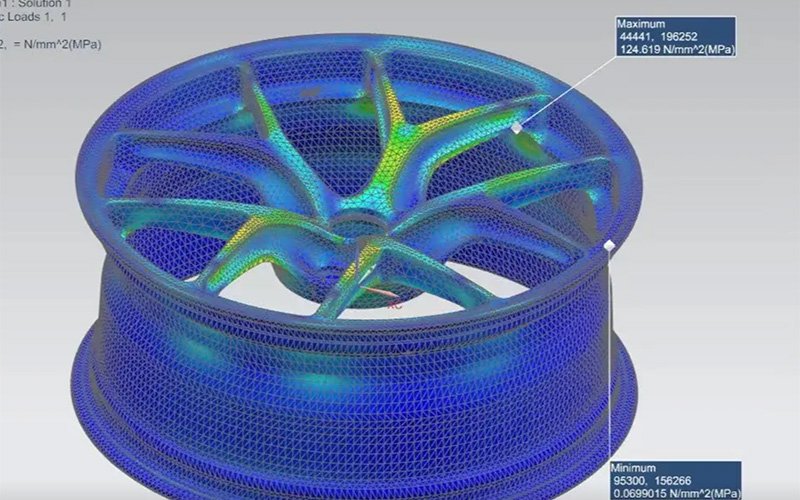
Finite Element Analysis (FEA) ensures safety and performance. The computer simulation tests structural integrity under extreme loads, allowing us to shave off excess weight without compromising strength.
We offer more than just machining—we provide professional engineering support. To ensure the safety and performance of the wheels, we also conduct Finite Element Analysis (FEA). FEA helps us simulate the stress distribution of the wheels under extreme loads, such as high-speed driving, heavy loads, and sudden braking.
Through this analysis, we can identify potential structural weaknesses in advance and adjust the design—for example, keeping the necessary strength while hollowing out unnecessary parts to reduce weight.
Step 2: Material Selection – The Power of Forged Aluminum
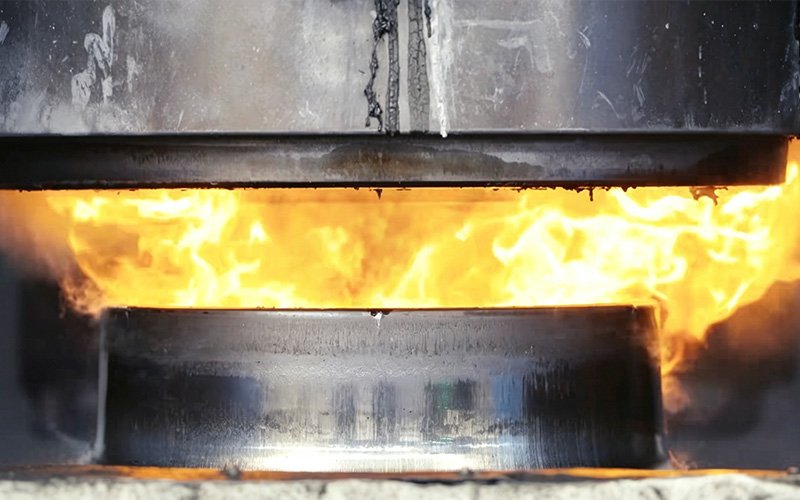
Shaped by extreme heat and immense mechanical pressure. Before precision CNC machining, a solid block of aerospace-grade 6061-T6 aluminum is superheated to make it malleable, then crushed under thousands of tons of force. This crucial forging process aligns the metal’s grain structure, creating a wheel blank that is exceptionally dense, strong, and free of porosity.
For custom wheels, we do not use casting materials. Instead, we exclusively adopt Aerospace-grade 6061-T6 Forged Aluminum Billets as the raw material. This choice is based on the inherent advantages of forged aluminum over cast aluminum.
Forged aluminum is made by compressing and heating solid aluminum under high pressure. This process makes the material density higher, with no pores inside.
Compared with cast aluminum, forged aluminum has greater strength and better durability, which can better withstand the various stresses encountered during driving and ensure the long-term use of the wheels.
Step 3: CNC Turning – Shaping the Profile
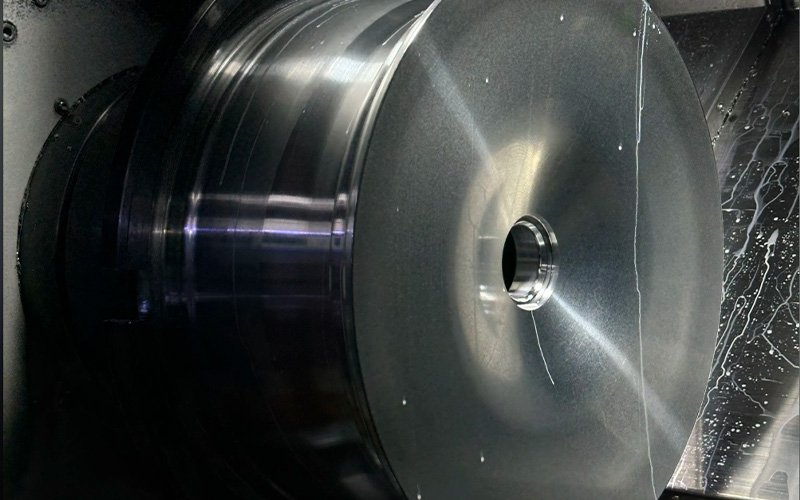
Precision CNC Turning. The raw forged blank is mounted onto a CNC lathe and spun at high speeds. During this stage, the outer barrel,
wheel width, and center hub bore are machined.
After selecting the raw materials, we start the CNC turning process. We use high-precision CNC lathes to fix the forged aluminum billets firmly, and then cut them according to the preset design parameters.
The main purpose of this step is to shape the basic profile of the wheel, including the barrel, lip, and other key parts. We strictly control the tight tolerances during the turning process to ensure that the outer diameter, thickness, and other dimensions of each part meet the design requirements, laying a solid foundation for the subsequent processing steps.
Step 4: CNC Milling – Crafting the Face and Spokes
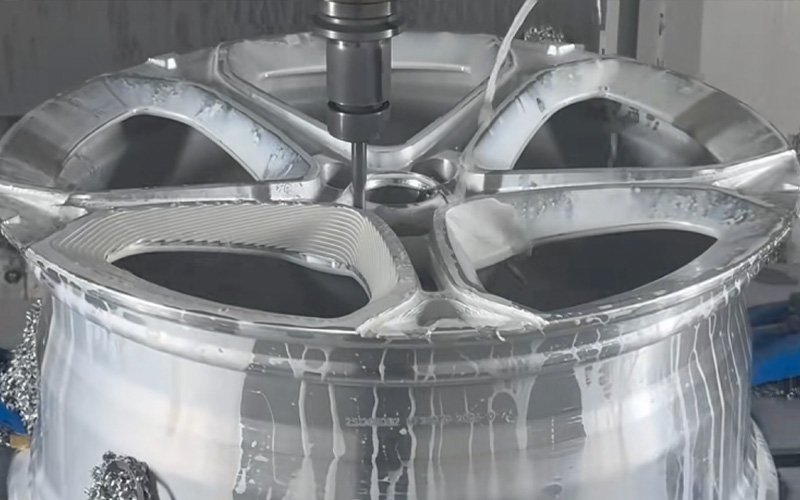
CNC milling centers translate the 3D CAD design into reality. The milling cutter strategically removes massive amounts of aluminum to create the custom spoke profile, drastically reducing the wheel’s unsprung weight. The milky fluid is a specialized coolant essential for flushing away metal chips (swarf) and controlling extreme heat during the high-speed cutting process.
CNC milling is the core part of our custom wheel processing. We use both 3-axis and 5-axis CNC machining equipment to handle different design needs.
3-axis CNC milling is suitable for relatively simple spoke designs, while 5-axis CNC milling has more advantages in processing complex structures. It can approach the workpiece from multiple angles, allowing us to craft extremely complex spoke shapes, deep concave effects, and side hollow designs that are difficult to achieve with traditional machining methods.
This ensures that your custom wheel can have the unique appearance you want while maintaining structural strength.
Step 5: Surface Finishing: Elevating Aesthetics & Durability
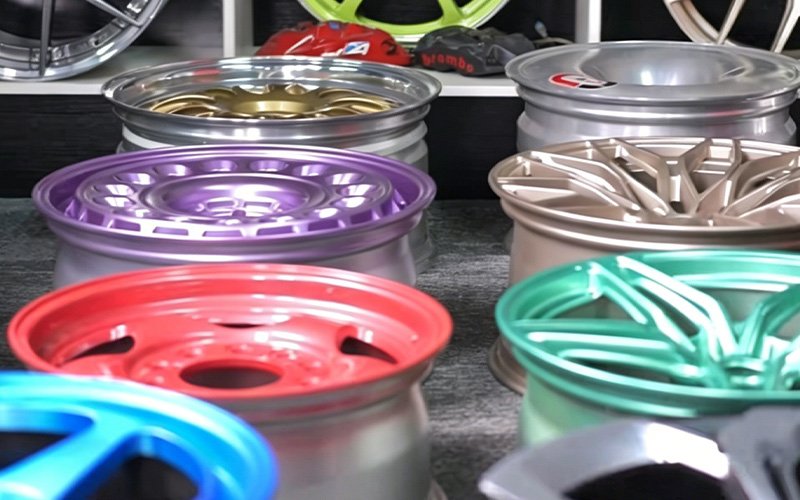
The final touch of true personalization. After precision CNC machining, the raw aluminum is transformed through premium surface finishing. Whether you desire a vibrant candy powder coat, a sleek brushed anodized finish, or a classic gloss metallic, these industrial-grade coatings not only define your vehicle’s aesthetic but also seal and protect the forged aluminum from brake dust, road salt, and the elements.
Once the wheel is machined, it’s time to add the finishing touch that brings your vision to life. We offer a range of high-quality surface finishes, each designed to enhance the wheel’s appearance and protect it from road debris, brake dust, and corrosion. Our most popular finishes include:
- Polished Finish: A sleek, mirror-like shine that highlights the wheel’s design and adds a classic, luxurious look. Polished wheels are carefully buffed to achieve a flawless surface.
- Matte/Brushed Finish: A modern, understated look that resists fingerprints and hides minor scratches. Brushed finishes are created by brushing the surface with a fine abrasive, while matte finishes use a specialized coating for a smooth, non-reflective appearance.
- Anodized Finish: A durable, corrosion-resistant finish that comes in a range of colors (e.g., black, blue, red). Anodizing creates a protective oxide layer on the aluminum, making the wheel harder and more resistant to wear—ideal for daily driving and off-road use.
- Custom Paint/Two-Tone Finish: For a truly unique look, we offer custom paint matching (to your vehicle’s color) or two-tone designs, combining different finishes to create a one-of-a-kind style.
Step 6: Quality Inspection & Testing: Ensuring Safety & Perfection
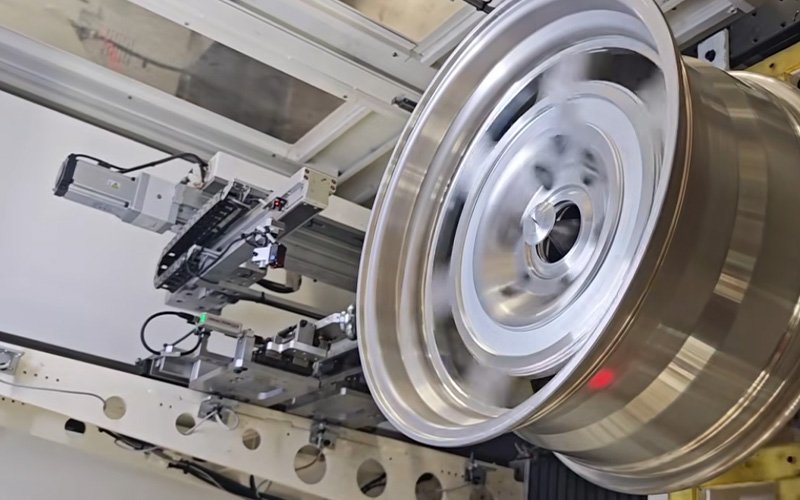
Here, the finished custom wheel undergoes automated dynamic balancing and runout inspection.
At our facility, quality is non-negotiable. Every custom wheel undergoes a rigorous inspection and testing process to ensure it meets our high standards—and yours. Our quality control team checks:
- Dimensional Accuracy: Using precision measuring tools, we verify that every dimension—from bolt pattern to offset to rim width—matches the 3D design exactly.
- Runout Testing: We perform runout testing to check the rotation accuracy of the wheel. This test ensures that the wheel does not have excessive runout during high-speed rotation, which helps avoid vibration and ensures driving safety and stability.
- Dynamic Balancing: Each wheel undergoes dynamic balancing testing. This step eliminates vibrations at high speeds, ensuring a smooth and comfortable ride. If the wheel is unbalanced, it may cause steering problems and premature tire wear, so this test is essential for driving safety and performance.
- Finish Quality: We inspect the surface finish for uniformity, scratches, or defects, ensuring it meets our aesthetic standards and provides long-lasting protection.
Only wheels that pass all these tests move on to the final step—packaging and delivery.
Step 7: Packaging & Delivery: Getting Your Custom Wheels to You Safely
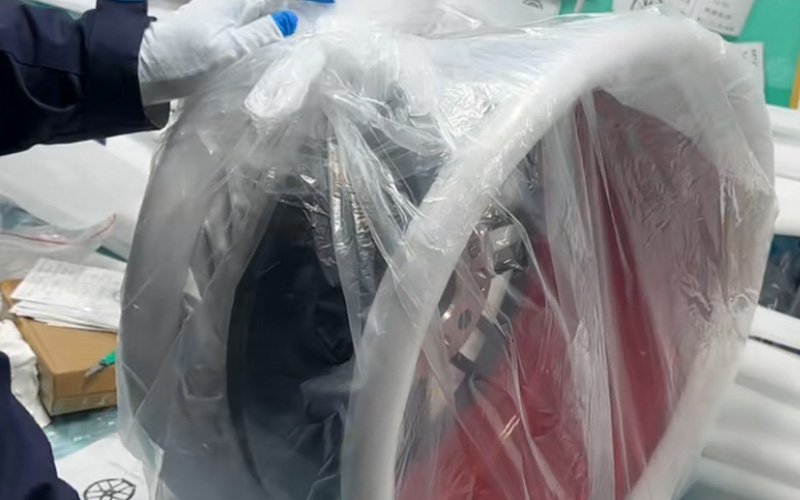
Each custom wheel undergoes strict quality control before packaging. Our staff handle the wheels with white gloves to avoid fingerprints. The wheel is then wrapped in anti-scratch plastic and fitted with high-density foam edge protectors. This protects the wheel lip from damage during shipping, so your custom rims arrive in perfect condition.
Each wheel is wrapped in protective foam and placed in a sturdy, custom box, with additional padding to absorb shock. We partner with reliable shipping carriers to ensure your wheels arrive on time and in perfect condition, no matter where you are in the world.
Cast Wheels vs. Flow Formed Wheels vs. Forged Wheels
There are three common manufacturing processes for aluminum wheels: casting, forging, and flow forming (also known as spun casting or rotary forging). Each method has its own structural properties, performance characteristics, and suitable applications.
Cast Wheels
Cast wheels are made by pouring molten aluminum alloy into a pre-made mold and allowing it to cool and solidify.
- Production is relatively simple and efficient, supporting large‑scale mass production.
- Lower overall production cost, making them widely available at a more affordable price.
- Material structure may contain minor internal porosity due to the casting process.
- Suitable for daily driving and standard factory‑style applications.
Flow Formed (Spun) Wheels
Flow formed wheels are cast first, then heated and spun under high pressure to stretch and compress the barrel area.
- The rim section becomes denser and stronger after spinning, improving strength and reducing weight.
- Balances performance and cost, falling between cast and forged wheels.
- Lighter than cast wheels with better structural rigidity.
Forged Wheels
Forged wheels are formed by pressing a solid aluminum billet under high pressure and then machined to shape.
- Material structure is denser with no porosity, resulting in higher strength and better durability.
- Lighter weight for the same strength, helping reduce unsprung weight and improve vehicle handling.
- Supports high‑precision CNC machining for complex designs, deep concave shapes, and full customization.
- Higher production cost due to more complex processing and material preparation.
Delivering Precision-Made Custom Forged Wheels
From design and engineering analysis to material selection, CNC machining, surface finishing, and strict quality inspection, every step is carried out carefully to ensure that the final product meets your expectations. We support custom orders for a full set of wheels (4 pieces per set) and can tailor the design and specifications to fit your needs.
If you are looking for custom forged wheels that fit your vehicle and meet your personal needs, please feel free to contact us.
Simply provide us with images of your desired wheel style, and our factory will design 3D drawings and proceed with production accordingly. Our team will provide you with professional consultation and support throughout the entire process—from understanding your needs to completing production and delivery—to help you get the custom wheels you want.
Share this article

Written by : Alex
A quick overview of the topics covered in this article.
Latest articles
October 18, 2026
September 15, 2026
September 9, 2026