
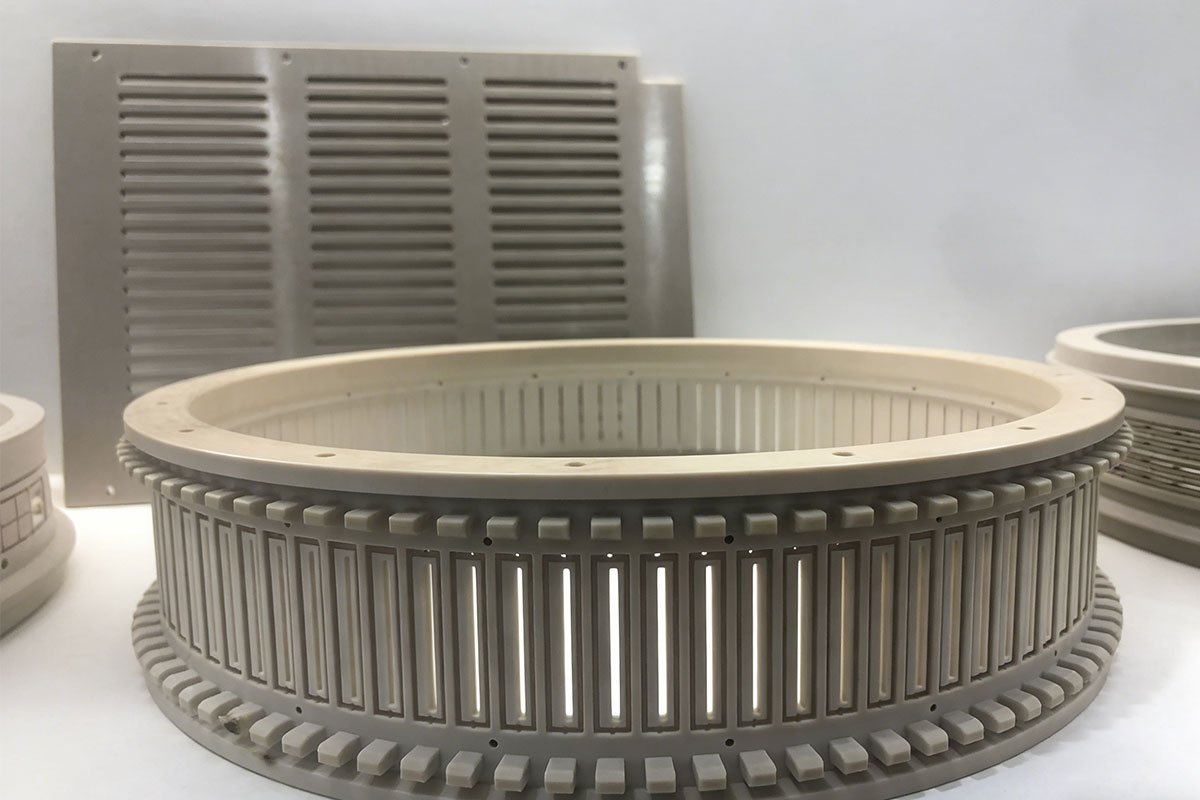
PEEK GF30 CNC Machining: How to Minimize Part Deformation
Glass-Filled PEEK, such as PEEK GF30 which contains 30% glass fiber, is a common type of modified PEEK material. It has good rigidity, dimensional stability and high temperature resistance. These properties make it a high-quality material that can replace metal in many fields.
However, the addition of glass fiber also brings some problems to machining. The glass fiber makes the material very hard, and a large cutting force is required when machining it. If traditional CNC vises are used to clamp the material tightly, the large mechanical clamping force will cause slight bending of the material. When the machining is completed and the vise is released, the part will release internal stress and rebound and warp instantly. This situation often leads to the scrapping of the expensive PEEK GF material, especially for thin-walled or flat parts.
Our Solution to the Machining Problem
To solve the warping problem caused by traditional clamping and achieve extremely high flatness of PEEK GF parts, we have abandoned the use of physical jaws such as CNC vises. Instead, we adopt industrial two-part epoxy (AB glue) for clamping.
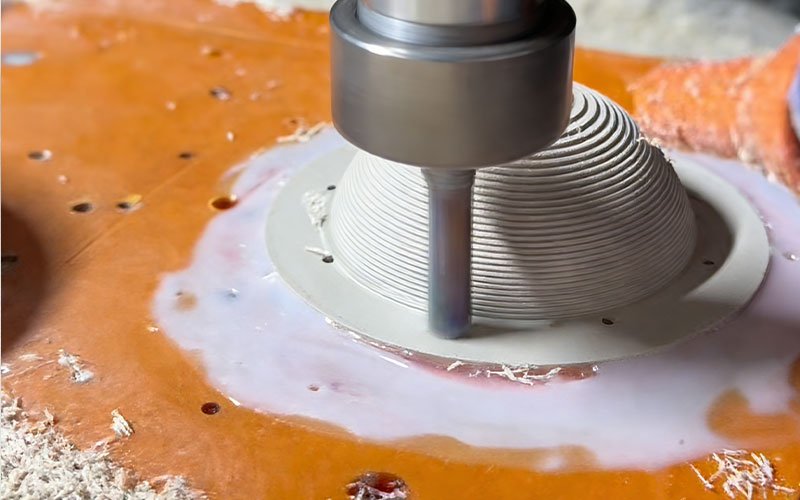
Stress-free fixturing in action: A delicate PEEK GF30 component is securely bonded to a Bakelite sacrificial plate using industrial two-part epoxy. This method completely eliminates clamping distortion while allowing full access for the CNC tool.
Why Epoxy?
1. Zero Mechanical Stress
The workpiece is smoothly glued to a flat bakelite plate. The bottom of the workpiece bears force absolutely evenly, without any stress from extrusion on both sides. This avoids the slight bending caused by uneven clamping force of traditional vises, ensuring that the material does not produce internal stress during the machining process.
2. Extreme Holding Power
Machining glass-filled PEEK requires a large cutting force. Ordinary tape or soft glue cannot withstand such force at all. After curing, the AB glue can provide strong support comparable to metal welding, which completely prevents the part from chattering during milling and ensures stable machining.
How Do We Remove the Strong Epoxy?
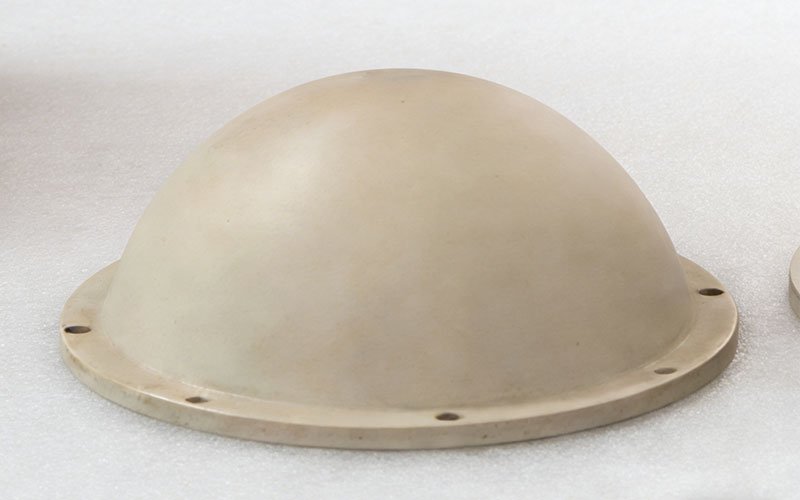
Using adhesive fixturing helps minimize mechanical clamping stress.
After learning about the strong holding power of AB glue, many customers will have a natural doubt: since the AB glue is so firm, will prying it forcefully after machining break or damage the brittle and hard PEEK GF parts? This is also a key concern for every customer who chooses this clamping method.
To solve this doubt and ensure the safety of PEEK GF parts, we have a professional solution: we use a special epoxy remover. This professional remover can effectively dissolve and remove the cured AB glue, and at the same time, it will not cause any damage to the surface and structure of the PEEK GF parts, ensuring that the parts remain intact and meet the required precision after being removed from the bakelite plate.
Discuss Your PEEK GF30 CNC Machining Requirements
Machining glass-reinforced polymers like PEEK GF30 requires specific process controls to manage both internal material stress and applied mechanical stress. By utilizing specialized workholding methods—such as the epoxy and Bakelite fixturing discussed above—we help engineers mitigate the risks of dimensional distortion and high scrap rates associated with these advanced engineering plastics.
Our engineering approach includes
- Process Evaluation: We review each CAD model to determine the most appropriate fixturing strategy, tooling selection (such as PCD end mills for abrasive materials), and machining parameters to meet your specific GD&T requirements.
- Quality Verification: Components are inspected using Coordinate Measuring Machines (CMM) before shipment.
- Cost Control through Lower Scrap Rates: By minimizing clamping-induced deformation, we reduce material waste. This systematic approach allows us to control production costs effectively when working with high-value materials like PEEK GF30.
Request a Technical Review and Quotation
If you are evaluating manufacturing partners for an upcoming project requiring PEEK GF30 CNC machining, our team is available to review your design. Submit your 3D CAD models and 2D drawings today. We provide a comprehensive Design for Manufacturability (DFM) assessment and a detailed quotation based on your specific tolerance requirements.
We specialize in machining PEEK GF30 as well as other grades of PEEK to meet your application needs.
Share this article

Written by : Alex
A quick overview of the topics covered in this article.
Latest articles
October 18, 2026
September 15, 2026
September 9, 2026