
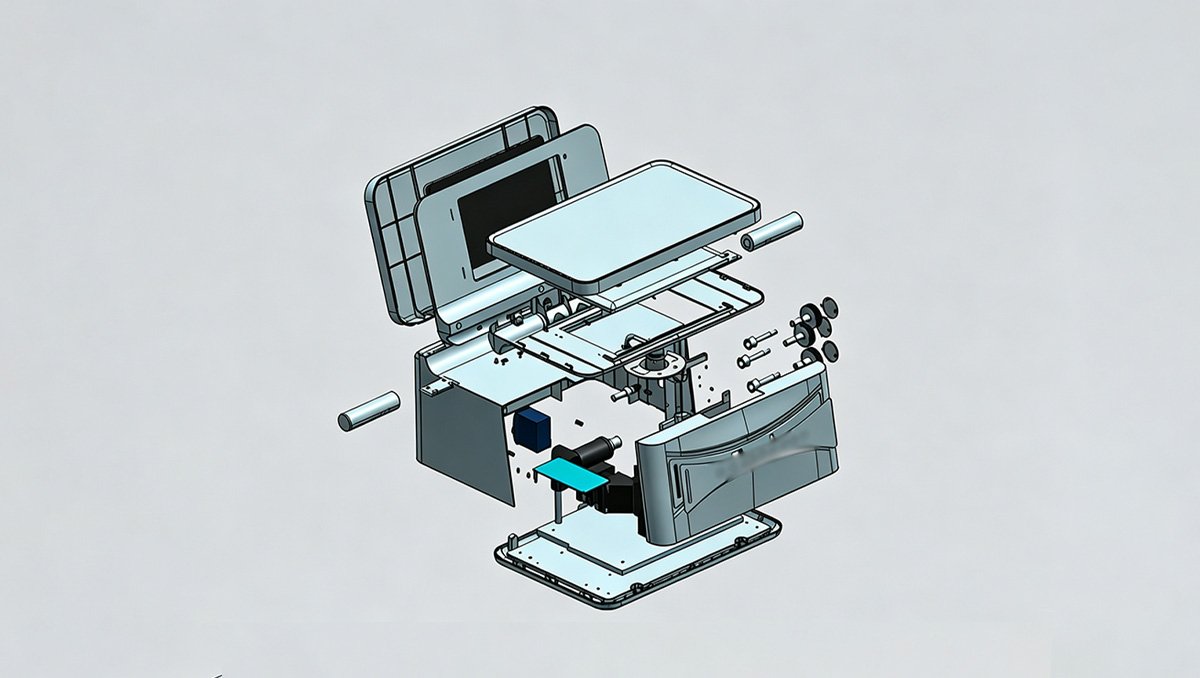
Hardware Development Mistakes That Kill Products Before Launch
Most hardware development mistakes don’t start on the production line. They start in a planning meeting, when someone agrees to a schedule that’s too tight or a BOM target that’s too low. Here’s what that actually costs — and what to watch for at every stage.
The two hardware development mistakes that cause most failures
Before diving into the failure modes, it helps to see the full lifecycle. Problems introduced early compound at every stage that follows.
The two decisions that cause most failures
Of all the things that can go wrong across these five stages, two decisions made at project initiation are responsible for the majority of R&D failures, recurring defects, and product recalls.
1. Compressing the development schedule
Every hardware project needs a schedule calibrated to its actual technical complexity — not to a business deadline working backwards. When timelines get cut, the first things to go are performance comparisons, repeated experiments, reliability verification, and comprehensive testing.
If stakeholders push back on timeline estimates, the right response is to show exactly which verification steps will be skipped — not to silently absorb the cut and hope for the best.
2. Setting BOM cost targets that are too aggressive
Market pressure creates real incentives to reduce bill-of-materials costs. The problem is where engineers are forced to make cuts: core functional circuits have limited optimization room, so cost pressure lands on protection and compliance components — TVS diodes, fuses, ESD protection.
Saving a few cents per unit on a protection diode can look like an easy win on a spreadsheet. In practice, removing them is one of the most reliable ways to generate mass field failures, safety incidents, and rework costs that dwarf the original savings.
If cost reduction is required, do it with full visibility into what’s being traded away — not as an optimization target handed to engineers without context.
Stage-by-stage risk checklist
Beyond the two major pitfalls, each development stage has its own pattern of hidden risks. These are the issues we see most often.
Solution validation
- Insufficient consideration of industry and national standards, with no enough margin reserved. Products will face huge difficulties once relevant standards are updated.
- Failure to evaluate the full application environment: ESD, surge voltage, high humidity, vibration
- Protective measures not designed in early enough to be cost-effective to add later
Technical R&D
- Hardware: missing ESD protection on interfaces, under-spec MOSFETs, inadequate circuit protection
- Software: incomplete module initialization, weak anti-interference settings
- Structural: poor thermal design, overlooked IP rating, insufficient material strength, unprotected antenna and battery compartments
Testing
- Teams complete basic functional testing but skip consistency, environmental adaptability, and safety/reliability testing
- Selective testing — only testing what you expect to pass — leaves the biggest risks invisible
- Lowered test standards under schedule pressure are rarely disclosed to stakeholders
NPI & mass production
- Incomplete incoming material inspection rules
- No robust sampling or full-inspection system in place
- Unclear or missing production operation guidelines, leading to inconsistent output
What rigorous development actually looks like
The pattern behind successful hardware projects is consistent: reasonable schedules based on technical reality, cost targets that account for protection and compliance components, and testing scopes that aren’t selectively trimmed under pressure.
That doesn’t mean every project needs an unlimited budget or timeline. It means that tradeoffs are made explicitly, with full visibility into what’s being traded away — not silently absorbed by the engineering team.
From design files to physical product – custom CNC machining services
We handle prototyping, small-batch production, and enclosure design — so whether you need a single unit to test or a small run to ship, we can turn your files into parts quickly and without cutting corners on quality.
Share this article

Written by : Alex
A quick overview of the topics covered in this article.
Latest articles
October 18, 2026
September 15, 2026
September 9, 2026