
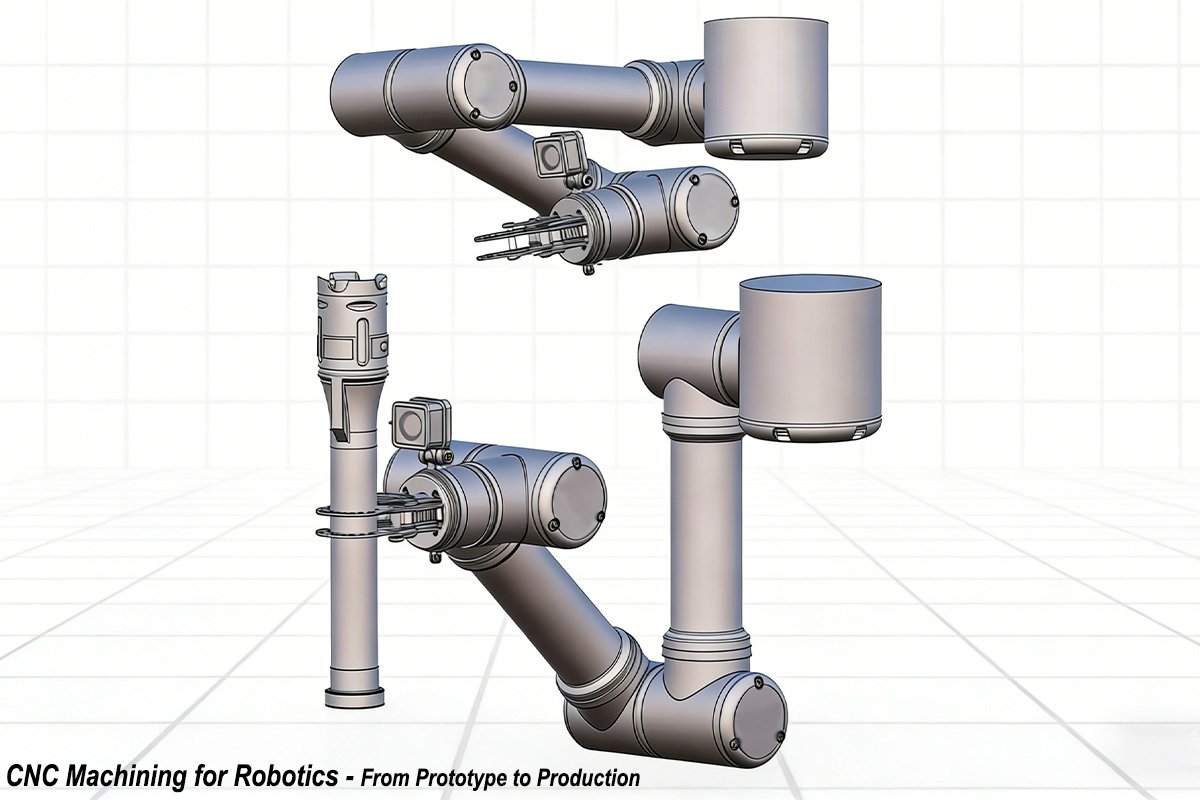
Custom CNC Machining for Robotics: Manufacturing Precision Parts
In the era of intelligent manufacturing, robotics has become a core driving force behind industrial upgrading, with applications spanning industrial production, medical care, aerospace, and daily services. Behind every high-performance robot—from the flexible joints of humanoid robots to the precise end effectors of industrial arms—lies a critical foundation: Custom robot parts manufacturing powered by CNC (Computer Numerical Control) machining.
The Inseparable Connection Between CNC Machining and Robotics
Robots rely on hundreds of precision components to achieve smooth movement, accurate positioning, and stable operation, and the manufacturing of these components is highly dependent on CNC machining technology. Unlike traditional manual machining, CNC machining uses computer-programmed instructions to control machine tools for automated cutting, milling, turning, and drilling, ensuring that each component meets the strictest technical standards of robotics. From the core transmission system that acts as the “heart” of the robot to the structural parts that form its “skeleton,” CNC machining is the key to translating robotic design concepts into practical, high-performance products.
Why CNC Machining is Crucial for Robotics
Ultra-High Precision
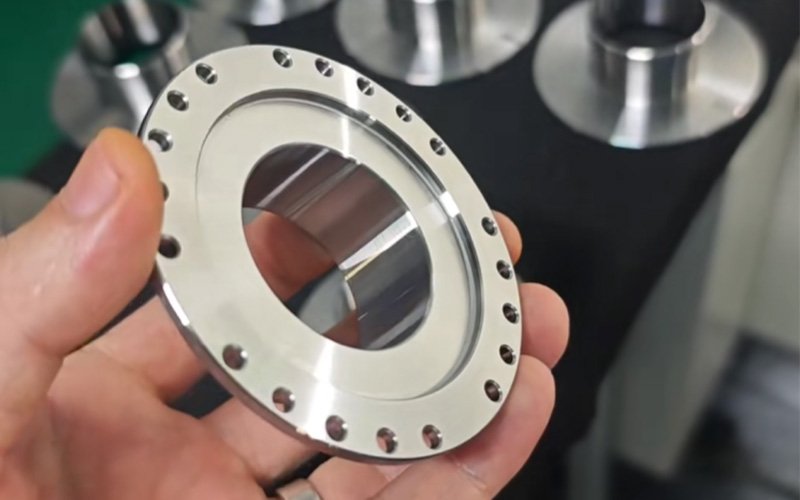
A precision CNC-machined flexspline blank before gear cutting. In harmonic drives, achieving perfect concentricity and maintaining ultra-thin walls at this turning and milling stage is critical. Any deviation here will amplify errors in the final gear profile.
Robotic components, especially joint reducers, servo motor parts, and sensor bases, have extremely strict requirements for dimensional accuracy. For example, the tooth pitch error of harmonic reducers and RV reducers (core components of robotic joints) needs to be ≤3μm, and the coaxiality of servo motor housings must be ≤0.005mm to ensure precise power transmission and positioning. CNC machining can stably achieve tolerances of ±0.005–0.01mm and surface roughness of Ra≤0.4–0.8μm, far exceeding the capabilities of traditional machining methods.
This high precision ensures that robotic joints move smoothly without jitter, end effectors can complete delicate operations (such as medical robot surgeries and electronic component assembly), and sensor bases maintain stable positioning, directly improving the robot’s repeat positioning accuracy and operational reliability.
Rapid Iteration
Robot R&D relies on continuous testing and optimization. CNC machining directly processes physical parts from CAD models, reducing prototyping cycles and accelerating design verification and product iteration.
Excellent Strength-to-Weight Ratio
CNC machining supports pocketing and internal hollowing processes. These techniques reduce component weight while preserving structural rigidity, helping extend battery life and improve energy efficiency for mobile robots.
High Material Compatibility
CNC works with a wide range of engineering materials used in robotics, including metals, alloys, and engineering plastics, allowing flexible material selection for structural, load-bearing, and functional parts.
Consistent Batch Production
CNC machining delivers repeatable accuracy in volume production, ensuring uniform quality across all robotic components and supporting stable assembly and long-term operational reliability.
Key Robotic Components Manufactured by Custom CNC Machining
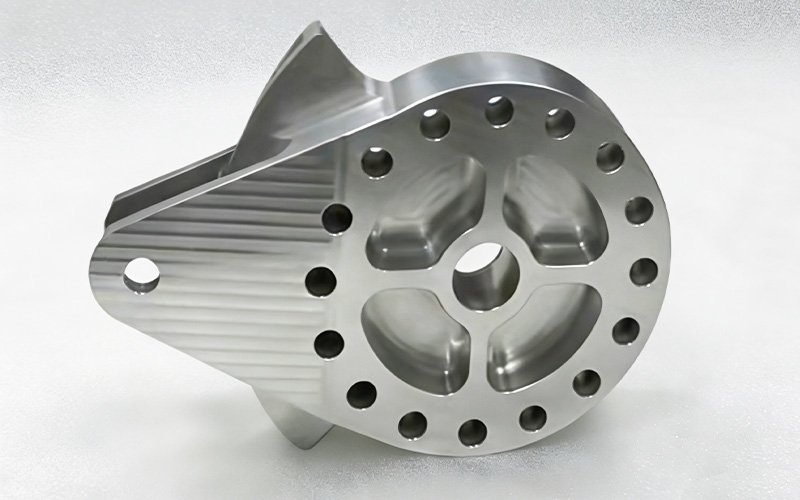
Custom actuator mount ready for assembly. Precision multi-axis CNC milling ensures that the mating surfaces are perfectly flat and the mounting holes align flawlessly, critical for vibration-free robot joint movement.
Custom CNC machining is widely used in the production of core robotic components, covering every key part of the robot. Here are the most common applications:
Transmission System Components: Harmonic reducers, planetary reducers, RV reducers, ball screws, and servo motor housings—critical for precise power transmission and speed control.
Joint & Structural Components: Robotic arm sections, joint housings, flanges, and lightweight brackets—providing structural support and flexible movement, often processed from aluminum alloy and titanium alloy for high strength and light weight.
End Effectors: Grippers, fingers, tool changers, and suction cups—requiring high precision (±0.005mm) to complete delicate grasping and operation tasks.
Sensor Bases: Bases for vision sensors, force control sensors, and encoders—with flatness ≤0.003mm and coaxiality ≤0.005mm to ensure reliable sensor data feedback.
Custom Fixtures & Tooling: Assembly trays, positioning jigs, and modular tooling—supporting robot assembly and operation efficiency.
Best Materials for Robotic CNC Parts
Selecting the right materials is critical for robotic components, as they directly influence strength, weight, durability, and performance. The most commonly used materials for robotic CNC parts include:
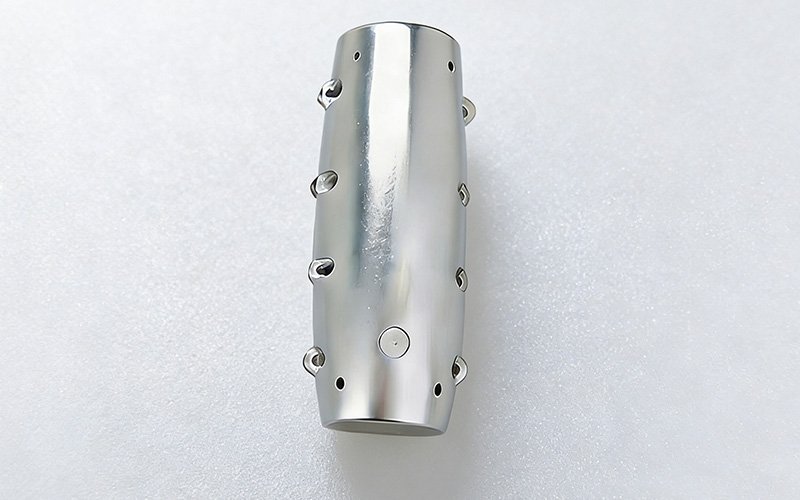
This robotic arm shell is CNC machined from Magnesium alloy—a material 30% lighter than aluminum. Machining magnesium requires highly specialized coolant and safety protocols to manage flammability. We have the expertise to safely and precisely machine these advanced lightweight alloys.
- Aluminum Alloys (6061, 7075): Lightweight, strong, and easy to machine, ideal for robotic arms, joints, housings, and structural parts where weight reduction matters.
- Magnesium Alloys: When aluminum 7075 just isn’t light enough, cutting-edge robotics engineers turn to Magnesium. It is the lightest structural metal available, making it perfect for the outer shells and long linkages of collaborative robots (cobots) and quadruped robots.
- Stainless Steel (303, 304, 17-4 PH): Offers excellent corrosion resistance, high strength, and wear resistance, widely used in gears, shafts, bearings, and load-bearing components.
- Titanium Alloy: Combines ultra-high strength, low weight, and outstanding corrosion resistance, perfect for precision parts in medical robots, aerospace robots, and high-stress joint components.
- Engineering Plastics (PEEK, POM, Nylon, PET): Light, chemical-resistant, and self-lubricating, suitable for non-conductive, low-friction components such as insulators, grippers, and sensor parts.
- Copper & Brass: Used for electrical components, heat-conductive parts, and connectors in robotic systems that require high conductivity.
Each material serves different robotic applications, and custom CNC machining allows full flexibility to choose the optimal material for your project.
Why Choose Our Custom CNC Machining Services for Your Robotics Project?
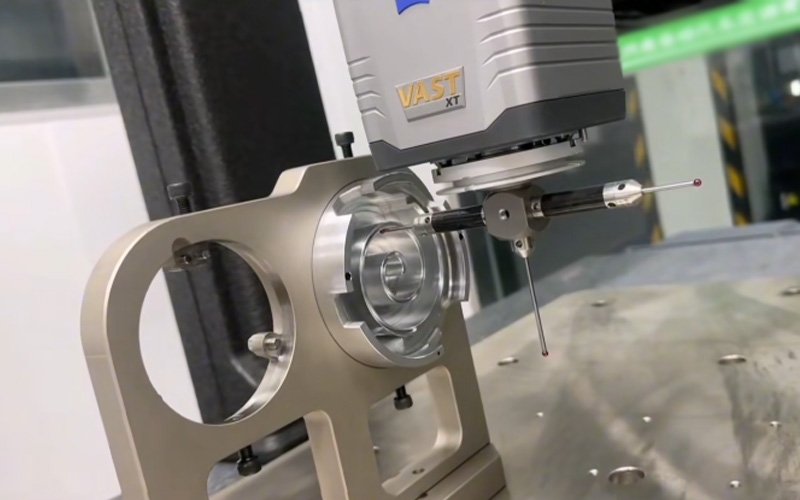
High-Precision Equipment
We are equipped with imported 5-axis CNC machining centers, Swiss turning machines, and CMM(coordinate measuring machines), ensuring machining accuracy of ±0.005mm and full inspection of key dimensions.
Customized Solutions
Our team of engineers has rich experience in robotic component machining, providing one-stop services from design optimization, material selection, and process customization to prototype testing and mass production, adapting to projects of all sizes (prototyping, small-batch, and mass production).
Competitive Pricing & No Minimum Order
We offer transparent pricing with no hidden costs, supporting small-batch custom orders to meet the needs of startups and large enterprises alike.
Get Your Custom CNC Machining Solution for Robotics Today
Whether you are developing a new humanoid robot, optimizing industrial robot components, or need custom fixtures for robotic production, our professional team is ready to help. Submit your 3D drawings and project requirements, and we will provide you with a free quote and technical consultation within 24 hours.
Share this article

Written by : Alex
A quick overview of the topics covered in this article.
Latest articles
October 18, 2026
September 15, 2026
September 9, 2026