
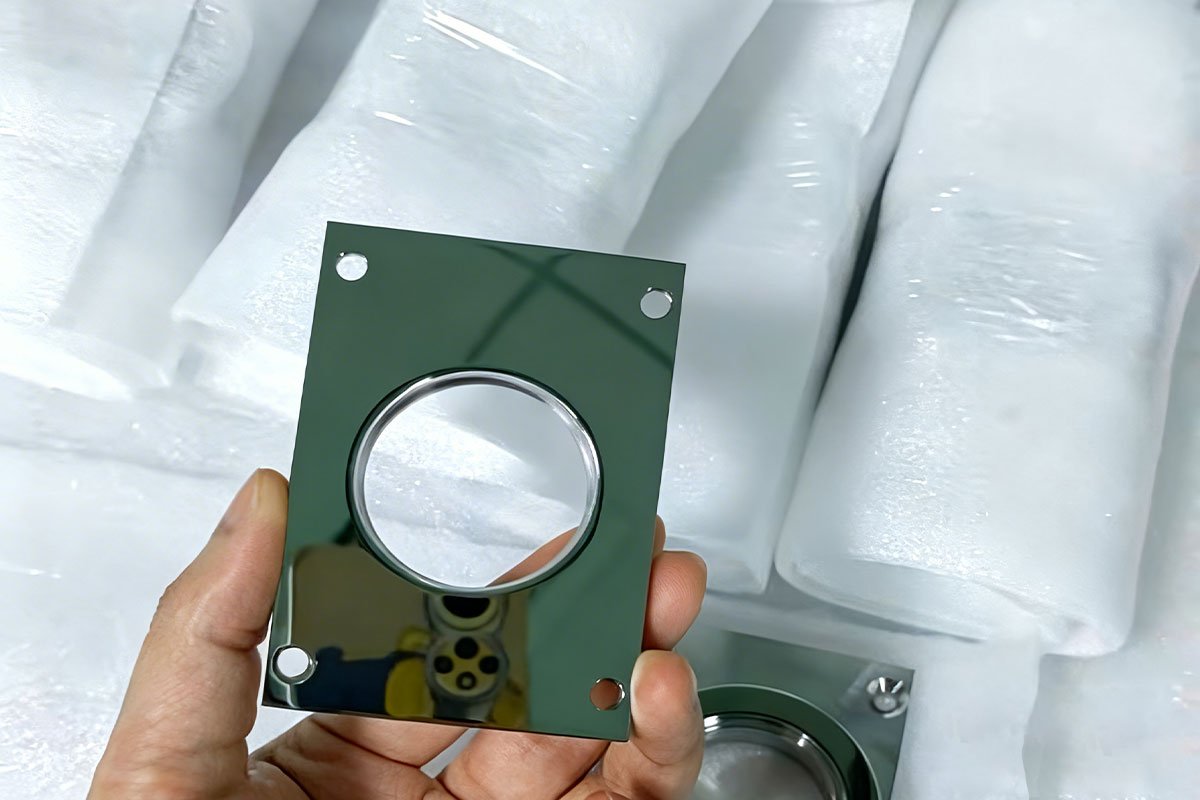
Mirror Finish Aluminum: A Guide to High-Gloss Parts
Aluminum is one of the most versatile and commonly used materials in custom CNC aluminum machining. Although its natural silver-gray appearance works for many functional parts, some applications — including consumer electronics, automotive trim, optical reflectors, and luxury goods — require a high-gloss or mirror-like surface.
Achieving a consistent high-gloss finish on aluminum parts depends on precise CNC machining and appropriate post-processing methods. In this guide, we will introduce several common surface finishing processes for creating a smooth, shiny surface on aluminum. We will also compare their advantages and limitations to help you choose a suitable solution for your project.
Choosing the Right Aluminum Alloy
Material Matters
Not all aluminum grades can achieve a high-quality high-gloss finish, as the final cosmetic effect is closely related to material purity and grain structure. Aluminum alloys with high impurity content (such as excessive iron, silicon, or copper) tend to form uneven inclusions on the surface during processing, which are difficult to eliminate even through polishing or machining, resulting in a dull, uneven surface.
Additionally, a coarse or uneven grain structure will lead to inconsistent material removal during polishing, cutting, or electroplating, making it impossible to achieve a smooth, uniform high-gloss effect. In contrast, aluminum alloys with high purity, fine and uniform grain structure, and good ductility are more conducive to surface processing, enabling the formation of a high-quality high-gloss finish.
Top Recommendations
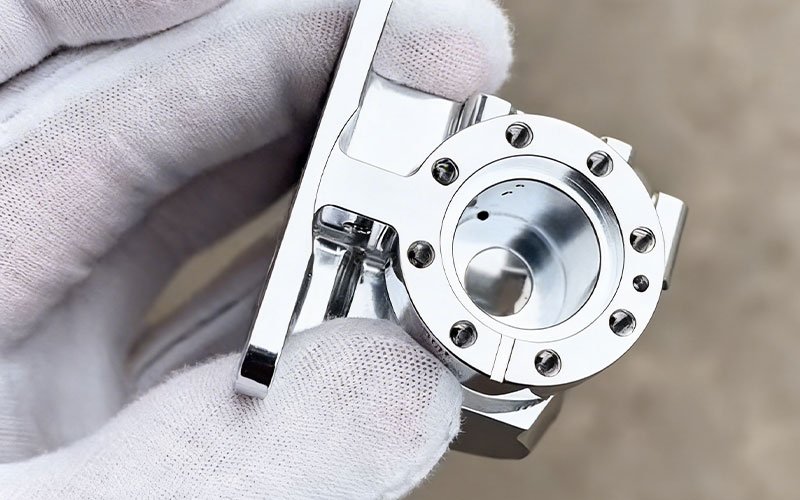
AL6061
As one of the most widely used aluminum alloys, AL6061 has excellent machinability and moderate strength. Its grain structure is fine and uniform, with low impurity content, making it easy to achieve a smooth surface through CNC machining, mechanical polishing, or anodizing. It is suitable for high-gloss parts that require both moderate strength and good cosmetic performance, such as 3C electronic casings, automotive interior trim, and precision hardware. Its good corrosion resistance also ensures that the high-gloss finish remains stable in various environments.
AL6063
AL6063 is renowned for its excellent extrudability and surface finish, often referred to as the “decorative aluminum alloy”. It has a finer grain structure than AL6061, with higher purity, which allows it to achieve a more uniform and bright high-gloss effect after polishing or anodizing. It is particularly suitable for high-gloss parts with complex shapes and strict cosmetic requirements, such as Custom high-gloss aluminum keyboard case and keycaps, automotive exterior trim, and high-end furniture hardware.
AL7075
As a high-strength aluminum alloy, AL7075 has excellent mechanical properties while maintaining good machinability. Its grain structure is dense and uniform, and after precise CNC machining or polishing, it can achieve a high-gloss finish with high hardness and wear resistance. It is suitable for high-gloss parts that require high strength and durability, such as automotive precision structural parts, high-end equipment casings, and aerospace-related lightweight high-gloss components. Note that its corrosion resistance is slightly lower than AL6061 and AL6063, so post-treatment (such as anodizing) is recommended to protect the high-gloss finish.
Core Processes for Achieving Mirror Finish on Aluminum Parts
Aluminum’s inherent properties—such as high ductility, low hardness, and susceptibility to oxidation—make mirror finishing challenging. The selection of processes depends on factors including desired gloss level, dimensional precision, batch size, and application environment. Below are the five most mainstream methods:
CNC Precision Machining
CNC precision machining is a subtractive manufacturing process that achieves a mirror finish directly through ultra-precise cutting with high-precision CNC machines and high-performance tools. It is widely used for custom CNC aluminum parts that demand exceptional dimensional accuracy and a flawless mirror surface, including 3C device casings, high-end audio equipment, and automotive precision trim.
The process relies on high-speed high-precision CNC machines paired with polycrystalline diamond (PCD) or monocrystalline diamond (MCD) tools. The cutting edges of these tools are polished to a mirror-level finish to prevent tool marks from being transferred onto the CNC aluminum surface, ensuring consistent quality across every machined component.
Pros
- High Precision: Simultaneously achieves dimensional strict tolerance and mirror finish, eliminating the need for secondary processing and ensuring consistent part quality.
- Suitable for Mass Production: Compatible with both prototype (1-10 pieces) and mass production, with stable process and high production efficiency.
Cons
- High Equipment & Tool Costs: High-speed CNC machines and PCD/single-crystal diamond tools have high initial investment and maintenance costs.
Electroplating
Electroplating is a surface modification process that deposits a thin layer of metal (such as chrome, nickel, or rhodium) on the aluminum surface through electrochemical reactions, thereby achieving a high-gloss reflective effect. It is commonly used for decorative aluminum parts that require a high-gloss, corrosion-resistant surface, such as automotive interior trim and high-end audio panels.
The process involves three core steps: pre-treatment (degreasing, pickling, and activation to remove oxide layers and impurities from the aluminum surface), electroplating (immersing the aluminum part in an electrolyte solution and applying an electric current to deposit the target metal layer), and post-treatment (sealing and polishing to enhance gloss and corrosion resistance). The thickness of the plating layer is controlled to ensure a uniform high-gloss finish.
Pros
- Exceptional Gloss: The plated layer has a high reflectivity, achieving a high-gloss effect superior to that of mechanical processing in some cases.
- Improved Corrosion Resistance: The metal plating layer acts as a barrier, preventing aluminum oxidation and enhancing the part’s service life in harsh environments.
- Small Batches: Lower initial investment compared to CNC high-gloss machining.
Cons
- Limited Durability: The plating layer is thin and prone to scratches; once damaged, the underlying aluminum will oxidize, affecting the overall appearance.
- Dimensional Changes: The plating layer adds thickness to the part, which may affect dimensional precision for high-precision components.
Mechanical Polishing
Mechanical polishing is a physical surface treatment process that uses abrasive materials (such as diamond powder, abrasive belts, and polishing wheels) to grind and polish the aluminum surface, gradually reducing surface roughness to achieve a high-gloss finish. It is a versatile process suitable for both small-batch prototypes and large-batch production, widely used in aluminum parts for various industries.
The process is divided into multiple stages: rough polishing (using coarse-grained abrasives to remove surface defects such as scratches and burrs), semi-fine polishing (using medium-grained abrasives to reduce surface roughness), and fine polishing (using nano-level abrasives and soft polishing wheels to achieve a high-gloss finish).
Pros
- Low Equipment Investment: Requires only polishing machines, abrasive materials, and polishing wheels, with lower initial and maintenance costs compared to CNC machining and electroplating.
- Strong Versatility: Suitable for aluminum parts of various shapes, sizes, and alloys, including complex curved surfaces and irregular parts.
- Adjustable Gloss Level: The high-gloss finish (from ordinary high gloss to ultra-high gloss) can be adjusted by changing abrasive grain size and polishing time.
Cons
- Low Production Efficiency: The multi-stage polishing process is time-consuming, making it inefficient for large-batch production compared to CNC machining.
- Dimensional Tolerance Risks: Excessive polishing may reduce part thickness and affect dimensional precision, especially for thin-walled parts.
Chemical Polishing
Chemical polishing is a chemical surface treatment process that uses a mixed acid electrolyte to selectively dissolve the uneven protrusions on the aluminum surface, thereby achieving a smooth, high-gloss finish. It is a batch processing method suitable for large quantities of small aluminum parts, such as 3C electronic accessories and precision hardware.
The process involves immersing the aluminum part in a heated chemical polishing solution (typically a mixture of phosphoric acid, sulfuric acid, and nitric acid) at 80-120℃. The acid solution dissolves the high points on the aluminum surface faster than the low points, gradually leveling the surface. After polishing, the part is rinsed with clean water and subjected to neutralization and drying to prevent oxidation.
Pros
- High Production Efficiency: Can process multiple parts simultaneously in a single batch, with short processing time (usually 5-15 minutes per batch).
- Uniform Finish: The chemical reaction is uniform, ensuring consistent high-gloss finish across all parts in a batch, with no manual operation errors.
- Suitable for Complex Shapes: The electrolyte can fully penetrate into small holes, gaps, and complex surfaces, achieving a uniform finish that is difficult to achieve with mechanical polishing.
- Low Labor Costs: Automated batch processing, requiring minimal manual intervention, reducing labor costs significantly.
Cons
- Strict Process Control: The polishing effect is highly dependent on the concentration, temperature, and immersion time of the electrolyte; slight deviations may lead to uneven brightness or surface corrosion.
Anodizing with High-Gloss Finishing
Anodizing with high-gloss finishing is a combined process that first achieves a smooth surface through mechanical or chemical polishing, then forms a transparent anodic oxide layer on the aluminum surface through anodization, enhancing the high-gloss effect while improving corrosion and wear resistance. It is widely used in high-end decorative aluminum parts that require both a high-gloss finish and long-term durability, such as automotive exterior trim and high-end furniture hardware.
The process consists of two core stages: pre-finishing (mechanical or chemical polishing to achieve a high-gloss surface) and anodization (immersing the polished aluminum part in an electrolyte solution to form a transparent anodic oxide layer). The transparent oxide layer does not affect the high-gloss reflectivity but enhances the surface’s resistance to oxidation and scratches.
Pros
- Durable High-Gloss Effect: The combination of polishing and anodization ensures the high-gloss finish is both bright and durable, with the anodic oxide layer preventing oxidation and wear.
- Corrosion & Wear Resistance: The anodic oxide layer has strong corrosion resistance, making the part suitable for outdoor or harsh environments.
- Customizable Appearance: The transparent anodic oxide layer can be dyed into various colors (such as black, silver, and gold) while retaining the high-gloss effect, meeting diverse decorative needs.
Cons
- Complex Process & High Cost: The combined process (polishing + anodization) increases processing steps and costs, making it more expensive than a single polishing or electroplating process.
- Dimensional Changes: The anodic oxide layer adds a thin thickness to the part, which may affect dimensional precision for high-precision components.
- Limited Reflectivity: The transparent anodic oxide layer slightly reduces surface reflectivity compared to bare aluminum high-gloss surfaces or electroplated high-gloss surfaces.
Custom High-Gloss Aluminum Processing Services
Looking for a Manufacturing Partner You Can Trust?
At XINGDA CNC LIMITED, we specialize in high-precision custom CNC machining and provide one-stop CNC machining services. We offer a wide range of surface finishes, including high-gloss polishing and bright dip anodizing. Our engineering team ensures that your parts meet design requirements and are ready for market use.
Share this article

Written by : Alex
A quick overview of the topics covered in this article.
Latest articles
October 18, 2026
September 15, 2026
September 9, 2026