Anodizing Color Options
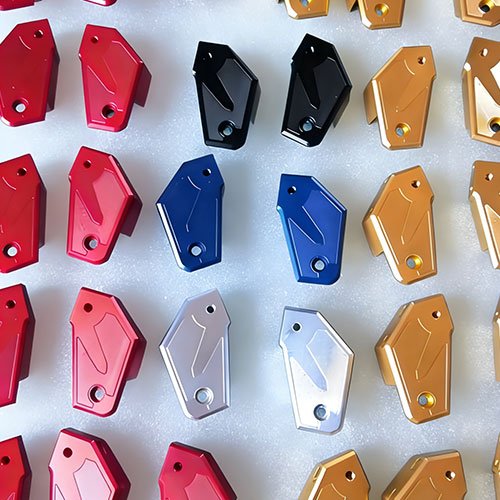
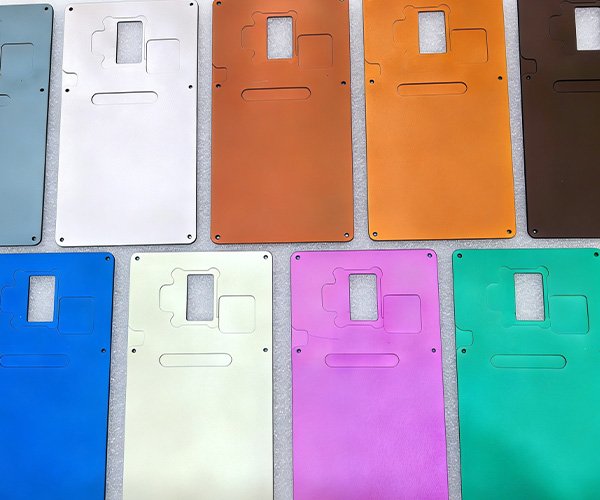
We offer a range of standard and custom color options for anodized CNC machined components. Colors are applied during the anodizing process to provide consistent, durable, and fade-resistant finishes. Don’t see the color you need? We provide custom color matching based on Pantone codes.
Standard Anodizing Colors
- Black
- Silver / Natural
- Red
- Blue
- Green
- Gold
- Special & Custom Colors
In addition to standard colors, we can provide custom color matching. Common special finishes include dark bronze, gray, and other customized shades based on customer requirements.
Notes on Color Consistency:
Color appearance may vary slightly depending on the aluminum alloy material.
Design Considerations for Anodizing
When designing parts for anodizing, engineers should account for the following technical factors:
Dimensional Growth :
Anodizing adds material to the surface of the part. Approximately half of the coating thickness builds up on the surface, while the other half penetrates the material. For tight-tolerance holes or threads, you must adjust your CAD model or specify masking.
Surface Preparation:
Anodizing does not hide CNC tool marks; it can actually highlight them. We strongly recommend combining anodizing with Bead Blasting to create a uniform, matte finish before the chemical process.
Electrical Conductivity:
Anodized surfaces are electrical insulators. If your part requires an electrical grounding point, you must specify areas to be masked (left un-anodized) or use a chemical conversion coating (e.g., Alodine/Chem Film) instead.
Contact Points:
The anodizing process requires parts to be electrically connected via titanium or aluminum racks. Small contact marks (rack marks) will be visible.
Types of Anodizing We Offer
We process parts according to the MIL-A-8625 standard, offering both Type II and Type III options.
| Specification | Description | Thickness | Best For |
|---|---|---|---|
| Type II (Sulfuric Acid) | The standard anodizing process. Provides good corrosion resistance and allows for bright color dyeing. | 0.005 – 0.025 mm | Decorative finishes, general corrosion protection, and color coding. |
| Type III (Hardcoat) | Produces a much thicker, denser oxide layer. Colors are typically limited to dark gray, dark bronze, or black. | 0.025 – 0.050 mm | Wear resistance, high abrasion environments, and electrical insulation. |
FAQs About CNC Machining Services