
What Is Bead Blasting?
Bead blasting is a common surface finishing process used to treat CNC machined components. The process uses compressed air to propel fine abrasive beads against the surface of a part. This controlled action removes burrs, machining marks, and surface contaminants without significantly altering part dimensions.
Bead blasting produces a uniform, matte, non-reflective surface finish. It is a non-destructive treatment suitable for many metals and plastics used in precision machining. The finish is consistent and even, making it widely used for parts requiring improved appearance, adhesion for subsequent coatings, or reduced light reflection.
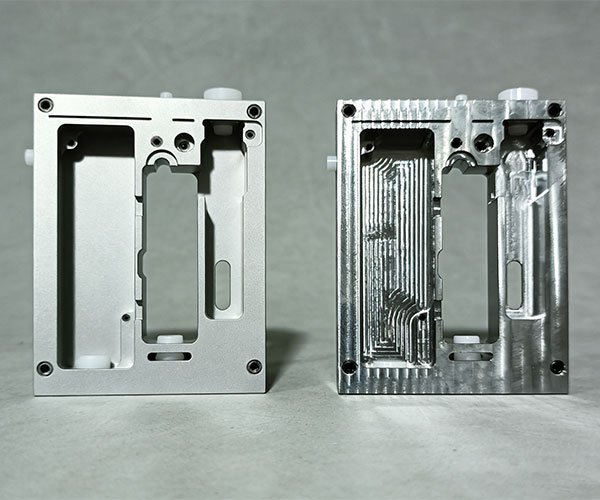
Common Bead Blasting Grit Options
We offer several standard bead blasting grit sizes to accommodate different surface finish requirements for CNC machined components.
| Grit Size | Finish Type | |
| #80 Grit | Coarse, heavy matte | Hides heavy tool marks, removes oxides and burrs |
| #120 Grit | Medium, satin-like finish | Most popular option; ideal for cosmetic CNC parts |
| #150+ Grit | Fine, smooth texture | Clean, subtle matte finish for precision components |
Suitable Materials for Bead Blasting
We offer several standard bead blasting grit sizes to accommodate different surface finish requirements for CNC machined components.
- Aluminum: Best results are achieved on aluminum parts. Bead blasting creates a consistent satin silver appearance, and is often followed by anodizing for improved corrosion resistance and cosmetic appeal.
- Stainless Steel: Bead blasting reduces surface reflectivity and provides a uniform, unified matte finish.
- Titanium: Produces a high-quality, high-end matte surface finish.
- Brass & Copper: Delivers a unique textured aesthetic for decorative and functional components.
Bead Blasting Notes
- Dimensional Change: Bead blasting removes only a minimal amount of material, but may affect precision tolerances. Typical dimensional change is approximately 0.005mm – 0.01mm.
- Masking Requirements: If specific areas must remain unblasted, please provide a detailed drawing with clear masking indications.
- Internal Features: Deep holes, narrow slots, and internal channels may not receive complete or uniform blasting coverage.
- Materials Not Recommended: Some soft plastics and low-strength materials are not suitable for bead blasting, as they may deform or suffer surface damage under blasting pressure.
Bead Blasting + Anodizing
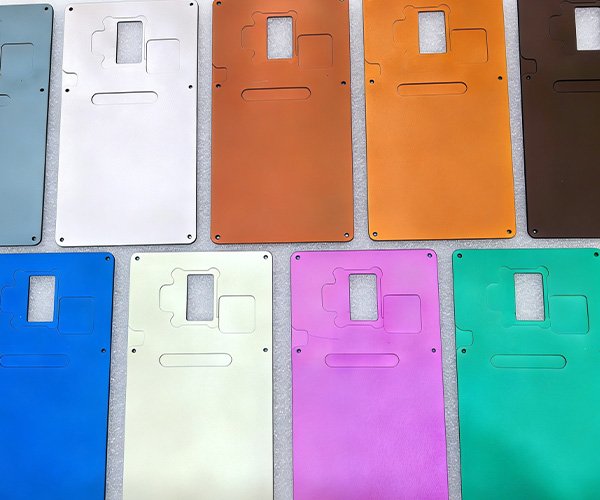
For cosmetic aluminum CNC parts, bead blasting combined with anodizing is the industry standard, delivering a premium, consistent finish similar to high-end consumer products like iPhones. Bead blasting creates a uniform matte surface, removing tool marks and burrs to ensure strong, even adhesion for anodizing. This pre-treatment prevents uneven coloring or visible flaws.
Anodizing then adds a durable, protective colored layer that enhances corrosion and wear resistance. The micro‑texture from bead blasting ensures rich, uniform color that will not peel, fade, or chip easily. This combination achieves a clean, satin appearance that balances aesthetics and performance, ideal for electronics, automotive trim, and visible functional components.
Benefits of Bead Blasting
Bead blasting delivers consistent surface characteristics for CNC machined parts across both prototyping and production runs. The process offers functional and practical advantages that support downstream manufacturing steps and long-term part performance.
- Uniform Surface: TextureThe process creates a smooth, non-directional matte finish across the entire part surface. It eliminates visible machining lines, tool marks, and minor surface irregularities, resulting in a consistent appearance across all components in a batch.
- Improved Coating Adhesion: Bead blasting modifies the surface profile to create micro-roughness. This texture provides an optimal base for paint, powder coating, anodizing, and other finishing processes, reducing the risk of coating peeling or delamination over time.
- Deburring and Defect Removal: As a secondary finishing step, it effectively removes small burrs, sharp edges, and residual material left from machining. It also cleans surface contaminants such as oils, dust, and oxide layers, ensuring parts meet dimensional and cleanliness specifications.
- Non-Destructive Finishing: When performed with controlled pressure and media size, bead blasting is a non-destructive process. It does not alter the critical dimensions, tolerances, or structural integrity of precision-machined components.
- Reduced Light Reflection: The matte finish produced minimizes light glare and reflection. This quality is beneficial for parts used in optical applications, aerospace components, or consumer products where reduced reflectivity is a design requirement.
- Corrosion Resistance Enhancement: By removing surface oxides and creating a uniform finish, bead blasting helps improve the uniformity of protective coatings. This indirect benefit contributes to enhanced corrosion resistance in metal components under operational conditions.
FAQs About CNC Machining Services